
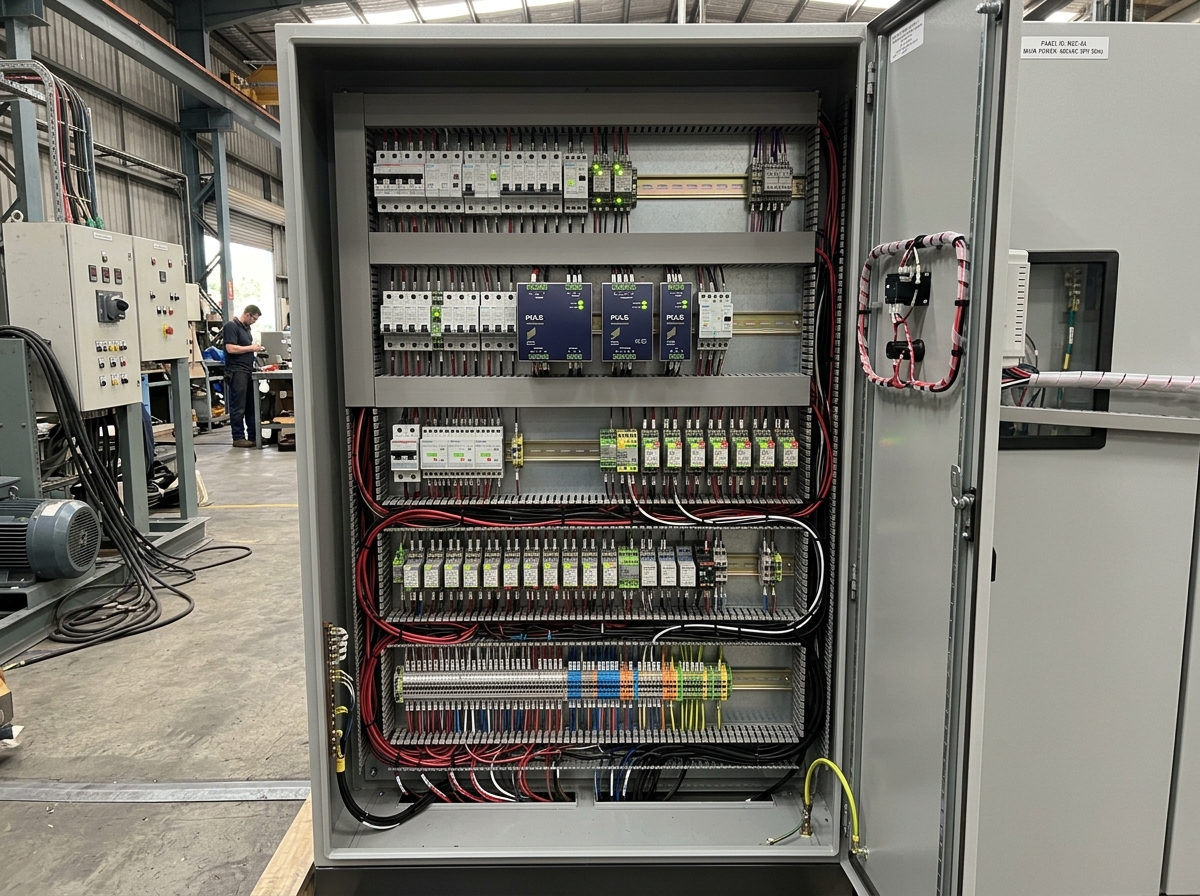
Choosing between Solid State Relays (SSR) and traditional Electromechanical Relays (EMR) is a fundamental decision when designing industrial automation control panels. Both technologies serve the primary function of isolating control signals from high-power loads, but operate on completely different physical principles.
Electromechanical Relays (EMR)
Electromechanical relays utilize an internal electromagnetic coil to physically move mechanical contacts and close or open an electrical circuit.
Advantages:
- Complete galvanic physical isolation.
- Low initial cost per pole.
- Negligible voltage drop across contacts.
Limitations:
- Mechanical wear limits total operation cycles (typically 100,000 to 1,000,000 operations).
- Acoustic noise during switching.
- Slower response time (10ms - 20ms).
Solid State Relays (SSR)
Solid State Relays utilize semiconductor components (such as thyristors, TRIACs, or MOSFETs) coupled with optical isolation to switch power without any moving parts.
Advantages:
- Millions of switching cycles with zero mechanical wear.
- Ultra-fast switching speeds (microsecond response).
- Silent operation and resistance to shock or vibration.
Key Consideration: SSRs generate internal heat (approx. 1 Watt per Ampere of load current) and require proper aluminum heat sinks for reliable thermal dissipation.